Skin Checks & Skin Cancer Medicine
Dr Shrestha is a skin cancer trained GP (not a dermatologist) with a Diploma in Dermoscopy, a Diploma in Skin Cancer Medicine and an Advanced Certificate in Skin Cancer Surgery. Comprehensive skin checks and on-site procedures at Riverstone Family Medical Practice.
All skin checks are carried out in private consultation rooms and can focus on a particular spot you've noticed or be a full top-to-toe examination. Checks are painless, relatively quick and a simple way to look after your long-term health.
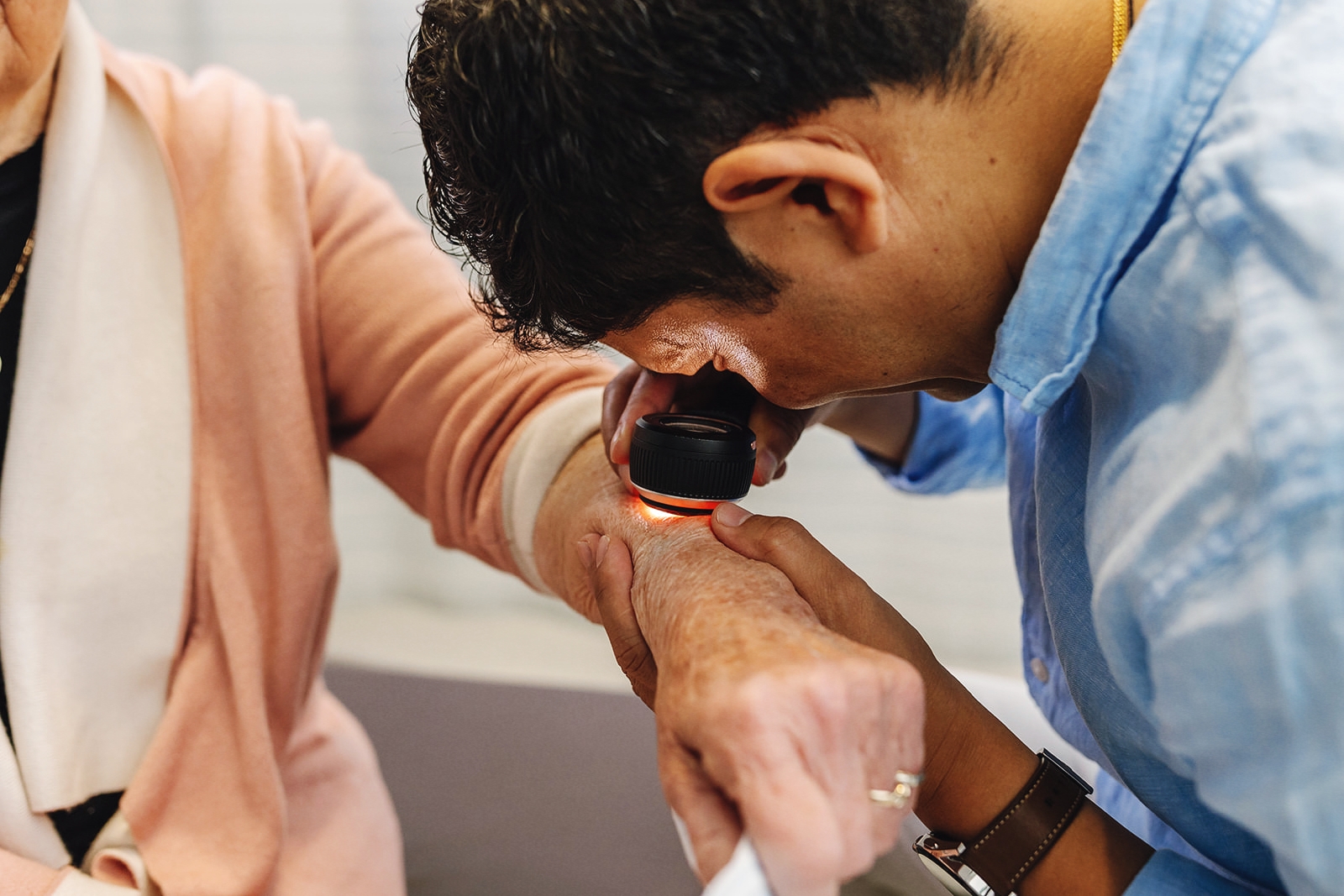
What to expect
A full skin check usually takes 15–20 minutes. You'll be asked about your sun exposure history, family history of skin cancer and any spots that concern you. Dr Shrestha then examines your skin from head to toe using a dermatoscope — a magnifying device that allows accurate assessment of moles and lesions. Any suspicious spots can be biopsied or removed on the same day where appropriate.
Why regular checks matter
- Australia has some of the highest skin cancer rates in the world and the harshest UV radiation.
- Skin cancers account for around 80% of all newly diagnosed cancers in Australia each year (Cancer Council).
- Early detection of melanoma and other skin cancers dramatically improves outcomes — early detection saves lives.
- Regular checks also monitor changes in existing moles and overall skin health.
- Higher risk: fair skin, strong family history, many moles, outdoor work, prior sunburns or prior skin cancers.
Services offered
- ✓Full-body skin examination using dermoscopy
- ✓Detection and diagnosis of melanoma, BCC and SCC
- ✓Punch and shave biopsies on-site
- ✓Surgical excision of skin cancers
- ✓Skin grafts and local flap repairs
- ✓Cryotherapy for sun spots and solar keratoses
- ✓Topical treatments (e.g. Efudix, Aldara)
- ✓Education on sun safety and self-examination
Types of skin checks
- Standard skin checks
- Mole examinations
- Skin blemish checks
- Sun damage / sun exposure checks
- Full body skin cancer checks
- Concerned area / spot checks
- Skin checks for children (when indicated)
Your doctor will advise you on suspicious areas to watch, sun protection, any questions or concerns, treatment options if something is found, and the overall health of the skin areas examined.
Frequently asked questions
Do I need to prepare anything for a skin check?
Usually no. Please wear loose-fitting clothing and avoid makeup, spray tans, nail polish, jewellery and watches so your skin (including under nails) is clearly visible and nothing is missed.
How often should I have a skin check?
Pay attention to your skin and report any new or changing spots promptly. If you are higher risk — past skin cancers or a strong family history — an annual skin check is generally recommended, more often if a lesion needs monitoring. Your doctor will advise the right interval for you. High-risk patients should also have regular optometry checks (ocular melanoma).
Is skin cancer preventable?
You can't completely prevent it, but you can significantly reduce your risk through sun-safe behaviour — sunscreen, protective clothing, hats and avoiding excessive sun exposure.
What happens during a skin check?
Your doctor visually examines your skin and uses a dermatoscope for a closer look at any spots of interest. You'll be asked about sun exposure and family history. A routine check usually takes about 15–20 minutes depending on how many lesions need a closer look.
What does a suspicious mole look like?
Suspicious moles are often asymmetrical, irregular in shape, multi-coloured, or change in size or appearance over time. Any mole that itches, bleeds or changes should be checked.
Should children have skin checks?
Skin cancer is less common in children but still possible. Checks are worthwhile, especially with a family history or any unusual moles or growths.